
Ready To Grill Steak Perfectly
Ingredient Notes
- Steaks: Choose steaks that are 1 to 2 inches thick. Thicker cuts help retain juiciness and ensure even cooking on the grill.
- Olive Oil: helps create a beautiful sear on the steaks. You can also use other high-heat oils like vegetable or canola oil.
- Seasonings: keeping it simple to let the flavor of the meat itself shine through. The combination of both white and black pepper adds a complex flavor with more bite.
- Butter: adds juiciness to the crust of the steak You can also use a compound butter or resting butter for an extra flavor boost.

Cuts Best Suited for Grilling
New York Strip: This cut offers a great balance of tenderness and flavor with a bit less marbling than ribeye, making it a solid option for grilling with fewer flare-ups.
Filet Mignon: Extremely tender and lean, filet mignon is less likely to cause flare-ups due to its lower fat content. It cooks quickly and evenly on the grill.
T-Bone and Porterhouse: These cuts include both the tenderloin and strip steak, offering a combination of textures and flavors. The bone adds flavor but can cause uneven cooking if not managed properly.
Sirloin: A more budget-friendly option, sirloin is leaner than ribeye and strip steak but still flavorful. It’s less likely to cause flare-ups due to its lower fat content.
Flank and Skirt Steak: These thinner cuts are perfect for quick grilling and are best cooked to medium-rare. They have less fat, reducing the risk of flare-ups.
Get Ready Your Gas Grill
Gas grills heat up quickly, allowing you to start grilling within minutes. Simply turn on the gas, ignite the burners, and you’re ready to go. It’s also super easy to maintain a consistent temperature as you only have to adjust knobs to do so. For the best of both worlds you can open the smoking box of our gas grill to add wood chip as smokey element.
Grilling Tips
Keep a Cool Zone: Set up your grill with a hot zone and a cool zone. If flare-ups occur, you can quickly move the steaks to the cooler side until the flames die down.
Trim Excess Fat: Before grilling, trim any excess fat from the edges of your steaks. This reduces the amount of fat that can drip onto the flames and cause flare-ups.
Keep the Lid Closed: Keeping the grill lid closed helps control the temperature and reduces the amount of oxygen that can fuel flare-ups.
Have a Spray Bottle Ready: Fill a spray bottle with water and keep it near the grill. If a flare-up occurs, use a quick spritz of water to control the flames. Be careful not to use too much water, as it can create steam and ash.
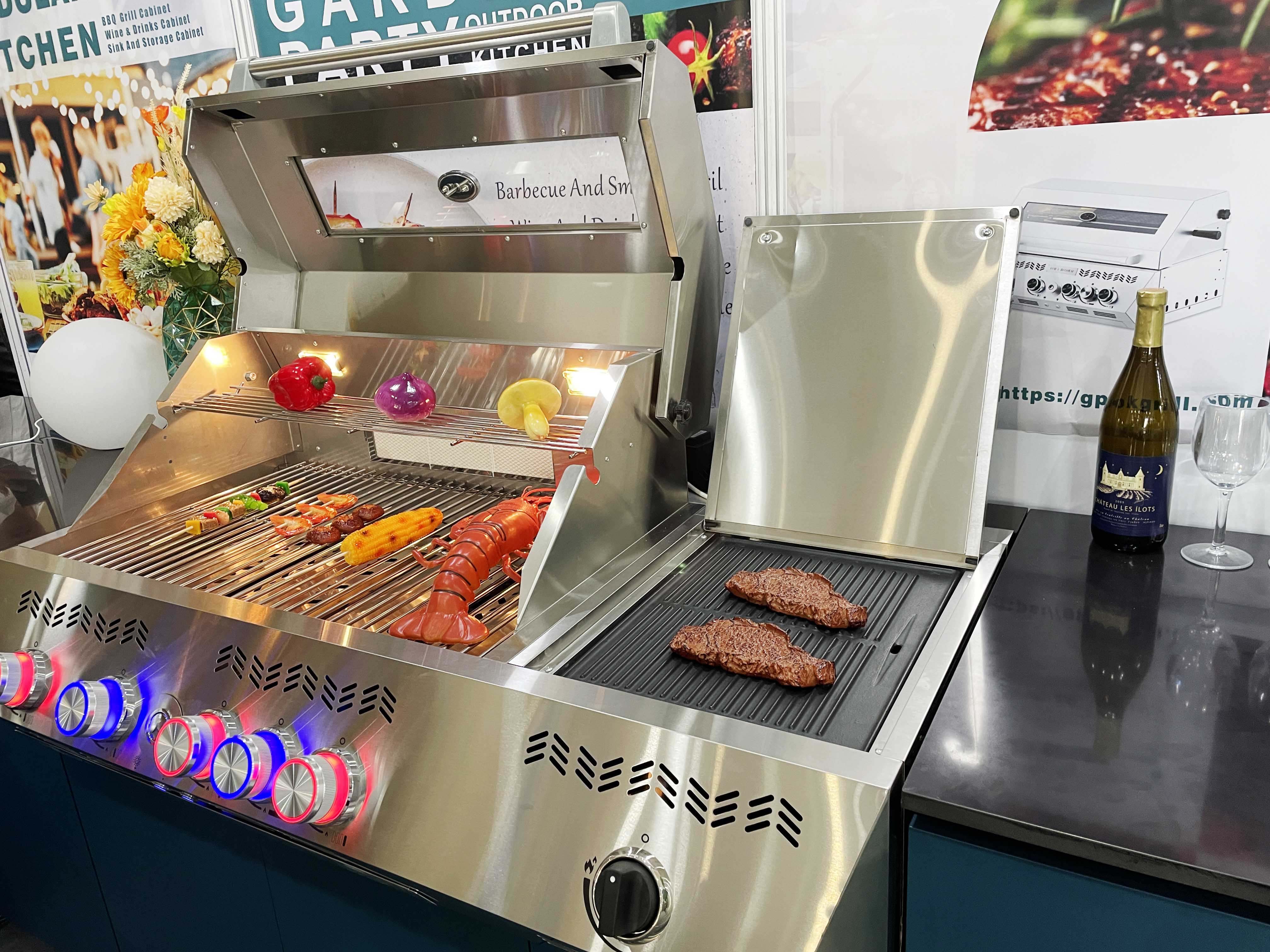

Full-Set Outdoor Kitchen Suite: Upgrade Your Patio with Sink Cabinets, Grills, and More
Modular Outdoor Kitchen